Field sobriety tests (FSTs) are roadside assessments police use to evaluate whether a driver is impaired by alcohol or drugs. These standardized tests measure your coordination, balance, and ability to follow instructions. Officers use FST results to establish probable cause for a DUI arrest and as evidence in court. However, you are not legally required to take them before arrest. Many factors unrelated to impairment can cause poor test performance, and FST results can be challenged in court.
San Diego criminal lawyer Anna R. Yum of the Law Offices of Anna R. Yum has defended DUI cases throughout California. The firm’s DUI defense attorney represents clients at the San Diego Central Division courthouse, Vista North County Regional Center, Chula Vista South Bay courthouse, and El Cajon East County Regional Center. Anna R. Yum understands how field sobriety tests work and how to challenge questionable results.
This guide explains what field sobriety tests are, which tests California officers commonly use, when you can refuse testing, and how to challenge FST results in court. You will also learn about your rights during DUI investigations and what to do after performing poorly on roadside tests. Call the Law Offices of Anna R. Yum at (619) 233-4433 to speak with Anna R. Yum about your case.
How Do Field Sobriety Tests Work in DUI Investigations?
Field sobriety tests evaluate physical and cognitive impairment during a DUI investigation. When an officer stops you for a traffic violation or at a DUI checkpoint, they observe your behavior for signs of intoxication. If they suspect impairment, they may ask you to step out of your vehicle and perform one or more standardized tests.
The National Highway Traffic Safety Administration (NHTSA) developed standardized field sobriety tests to provide consistency across law enforcement agencies. Officers trained in these procedures look for specific indicators of impairment. Poor performance can give police probable cause to arrest you for DUI, even without a breathalyzer or blood test.
FSTs are typically conducted before arrest. Officers use your performance, combined with other observations such as slurred speech or the odor of alcohol, to determine whether to make an arrest. Once arrested, you may be required to submit to chemical testing under California’s implied consent law.
What Are the Most Common Field Sobriety Tests in California?
California law enforcement officers use several field sobriety tests during DUI investigations. Three of these tests: the Horizontal Gaze Nystagmus, Walk-and-Turn, and One-Leg Stand are standardized and validated by the NHTSA. Officers may also administer additional non-standardized tests.
Horizontal Gaze Nystagmus Test
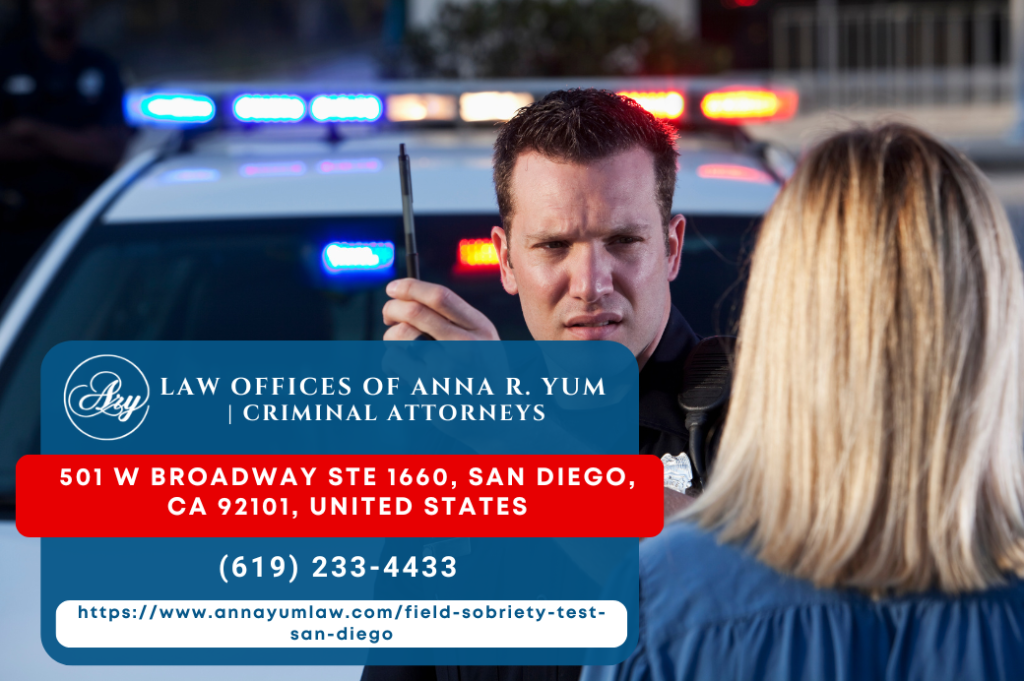
The Horizontal Gaze Nystagmus (HGN) test examines involuntary eye movements. An officer holds a stimulus, such as a pen or flashlight, and moves it horizontally in front of your face. You must follow the object with your eyes while keeping your head still.
The officer observes for nystagmus, which is an involuntary jerking of the eyes. Alcohol and certain drugs can cause or exacerbate this jerking motion, particularly at the edges of your peripheral vision.
Walk-and-Turn Test
The walk-and-turn test requires you to walk in a straight line, placing one foot directly in front of the other in a heel-to-toe pattern. After approximately nine steps, you must turn on one foot and return to the starting point using the same method.
Officers look for specific indicators of impairment:
- Inability to maintain balance during instructions
- Starting before the instructions are complete
- Stepping off the line
- Using arms for balance
- Taking the wrong number of steps
- Improper turning
One-Leg Stand Test
During the one-leg stand test, you must stand on one leg while raising the other approximately six inches off the ground. You are instructed to count aloud while maintaining this position for approximately 30 seconds.
Officers observe whether you sway, use your arms for balance, hop to maintain position, or put your foot down before the test ends. These indicators suggest impairment.
In addition to the three NHTSA-standardized tests above, California officers may also administer other field sobriety tests. These tests are not part of the NHTSA standardized battery, but may be used during investigations:
Finger-to-Nose Test
This test requires you to tilt your head back, close your eyes, and touch your nose with the tip of your index finger. You alternate between your right and left hand as instructed by the officer. The test assesses coordination and your ability to follow instructions.
Romberg Balance Test
The Romberg test measures your internal sense of time and balance. You stand with your feet together, tilt your head back slightly, and close your eyes. The officer asks you to estimate when 30 seconds have passed and then open your eyes.
Officers observe physical signs of impairment such as swaying, trembling, or significant miscalculation of the time period.
| Test Name | What It Measures | Common Indicators of Impairment |
|---|---|---|
| Horizontal Gaze Nystagmus | Eye movement control | Involuntary jerking at peripheral vision |
| Walk-and-Turn | Balance and coordination | Stepping off line, using arms, wrong number of steps |
| One-Leg Stand | Balance and counting ability | Swaying, hopping, putting foot down early |
| Finger-to-Nose | Coordination and instruction-following | Missing nose, incorrect hand used |
| Romberg Balance | Internal clock and physical stability | Tremors, swaying, significant time miscalculation |
Are Field Sobriety Tests Legally Required in California?
FSTs are voluntary before arrest, and the state’s implied consent law does not apply to these roadside tests. California Vehicle Code Section 23612 requires drivers to submit to chemical testing only after a lawful DUI arrest. This means breath, blood, or urine tests.
Refusing a post-arrest chemical test can result in enhanced penalties, including an automatic one-year license suspension by the DMV.
If you refused field sobriety tests and were arrested anyway, contact Anna R. Yum to evaluate the evidence against you.
DUI Defense Attorney in San Diego – Law Offices of Anna R. Yum

How Are Field Sobriety Tests Administered?
Proper administration of field sobriety tests requires officers to follow specific NHTSA guidelines. Officers must be trained and certified to conduct these tests. Training focuses on recognizing signs of impairment, administering standardized procedures, and scoring results accurately.
Before conducting tests, the officer must provide clear instructions. You should be given an opportunity to understand what is required. The officer should demonstrate the test when appropriate and allow you to ask questions.
Environmental conditions matter. Tests should be conducted on level ground with adequate lighting. Weather conditions, such as rain, wind, or extreme heat, can affect performance. Uneven pavement, gravel, or sloped surfaces make certain tests more difficult.
Officer Conduct During Testing
The officer must remain still and quiet during your performance. Movement or talking can distract you and interfere with results. Officers should also account for any physical limitations you disclose, such as injuries, medical conditions, or footwear that may affect balance.
Timing is critical for certain tests. The one-leg stand test, for example, requires you to hold the position for approximately 30 seconds. Officers should use a watch or other timing device to ensure accuracy.
After completing the tests, the officer evaluates your performance based on standardized scoring criteria. These criteria are designed to reduce subjectivity and provide consistency across different officers and jurisdictions.
Anna R. Yum can review how your field sobriety tests were conducted and identify procedural errors that may weaken the prosecution’s case.
What Factors Can Affect Field Sobriety Test Performance?
Many factors unrelated to alcohol or drug use can cause poor performance on field sobriety tests, and courts recognize that FST results are not absolute proof of impairment. Physical conditions such as age, weight, fitness level, or physical disabilities can affect balance and coordination, making tests like the walk-and-turn or one-leg stand challenging. Medical conditions, including inner ear problems, vertigo, neurological disorders, injuries, or recent surgeries, may also interfere with performance.
External factors like footwear, tight clothing, poor lighting, uneven ground, traffic noise, or fatigue can further affect results. Nervousness or stress during a traffic stop can mimic impairment through shaking, sweating, or difficulty concentrating. Many factors unrelated to alcohol or drug use can cause poor performance on field sobriety tests. Courts recognize that FST results are not absolute proof of impairment.
Physical conditions significantly impact test performance. Age, weight, and overall fitness level affect balance and coordination. People over 65 years of age, those who are overweight by 50 pounds or more, and individuals with physical disabilities may struggle with tests like the walk-and-turn or one-leg stand.
Medical conditions also interfere with performance. Inner ear problems, vertigo, and neurological conditions affect balance. Back, leg, knee, or foot injuries make it difficult to walk in a straight line or stand on one leg. Recent surgeries or chronic pain conditions can limit your ability to perform physical tasks.
External Factors That Affect Testing
Footwear and clothing matter. High heels, dress shoes, boots, or shoes with thick soles make it nearly impossible to walk heel-to-toe accurately. Tight clothing restricts movement. Officers should allow you to remove unsuitable footwear or adjust clothing before testing, but they often do not.
Nervousness and stress affect cognitive function. Being stopped by the police is intimidating. Anxiety can cause physical symptoms such as shaking, sweating, or difficulty concentrating, all of which can be mistaken for impairment.
Environmental factors also play a role. Poor lighting makes it hard to see where you are stepping. Uneven ground, gravel, or slopes affect balance. Traffic noise and flashing lights from police vehicles create distractions. Fatigue can mimic impairment as well.
Key Takeaway: Age, medical conditions, footwear, nervousness, environmental factors, and fatigue can all cause poor performance on field sobriety tests. These factors are legally recognized as defenses to FST evidence.
Can You Challenge Field Sobriety Test Results in Court?
Yes, you can challenge field sobriety test results in California DUI cases. Several defenses attack the accuracy and reliability of FST evidence.
Improper Administration
Officers must follow standardized procedures. If the officer failed to provide clear instructions, did not demonstrate the test, or rushed through the process, the results may be unreliable. Your attorney can review video footage or officer testimony to identify procedural violations.
Poor Environmental Conditions
Tests conducted in unsuitable conditions produce unreliable results. If the ground was uneven, the lighting was inadequate, or the weather conditions were poor, your attorney can argue that the environment, not impairment, caused poor performance.
Physical or Medical Limitations
If you have a documented medical condition, injury, or physical limitation, your attorney can present medical records to explain your poor performance. Conditions such as arthritis, vertigo, obesity, or recent surgery are recognized defenses.
Unsuitable Clothing or Footwear
High heels, dress shoes, or restrictive clothing make certain tests nearly impossible to complete accurately. Your attorney can demonstrate how your attire affected your ability to perform.
Officer Distraction or Improper Timing
If the officer moved around, talked during your test, or failed to time tests accurately, the results are tainted. Officers must remain still and silent to avoid distracting you.
Nervousness or Stress
Anxiety from the traffic stop itself can cause physical symptoms that mimic impairment. Your attorney can argue that nervousness, not alcohol or drugs, caused shaking, sweating, or difficulty concentrating.
You Were Not Impaired
Even if you performed poorly, that does not prove impairment. Your attorney can present evidence that you were fatigued, dehydrated, or had consumed a legal substance that affected coordination but not your ability to drive safely.
Anna R. Yum has successfully challenged field sobriety test evidence in DUI cases throughout San Diego. Call (619) 233-4433 to discuss your defense options.
What Happens If You Refuse Field Sobriety Tests?
Refusing field sobriety tests before arrest carries no legal penalty in California. Officers may view your refusal as an indication of guilt. If the officer has other evidence of impairment, they can still arrest you for DUI. After arrest, chemical tests (breath, blood, or urine) are mandatory under California Vehicle Code Section 23612.
License Suspension Consequences
The DMV will suspend your license for one year on a first offense. A second offense within 10 years will result in a two-year revocation, and a third or subsequent offense within 10 years will result in a three-year revocation. Note that prior DUI convictions and prior refusal suspensions both count as prior offenses under this rule. Additionally, prosecutors can use your refusal of a chemical test as evidence of consciousness of guilt. The jury may infer that you refused because you knew you were over the legal limit.
If you are arrested for DUI, you have only 10 days to request a DMV hearing to challenge the automatic license suspension. Missing this deadline means your license will be suspended automatically, regardless of the outcome of your criminal case.
Key Takeaway: You can legally refuse field sobriety tests before arrest without penalty. However, refusing chemical tests after arrest results in automatic license suspension and enhanced penalties.
If you refused testing and were arrested anyway, contact Anna R. Yum immediately to request a DMV hearing and begin building your defense.
What Is the Difference Between Field Sobriety Tests and Chemical Tests?
Field sobriety tests and chemical tests serve different purposes in a DUI investigation. Understanding the difference is important for protecting your rights.
Field sobriety tests are physical and cognitive assessments conducted before arrest. They test balance, coordination, and your ability to follow instructions. FSTs are voluntary. You can refuse them without legal penalty.
Chemical tests measure alcohol or drugs in your system. In California, implied consent after a lawful DUI arrest generally means a breath or blood test, with urine used only in limited situations (DMV notes urine is generally not available unless drugs are suspected or in certain medical situations).
Key Differences in Timing and Consequences
The timing matters. FSTs happen during the investigation phase, before the officer has probable cause to arrest you. Chemical tests occur after arrest, once the officer has already determined that probable cause exists.
The legal consequences also differ. Refusing an FST has no direct legal penalty, though it may contribute to the officer’s decision to arrest you. Refusing a chemical test after arrest triggers automatic license suspension and enhanced criminal penalties.
FST results are subjective. They rely on the officer’s observations and interpretation of your performance. Chemical test results provide objective data about your blood alcohol content (BAC) or the presence of drugs in your system. Both types of tests can be challenged in court, but the grounds for challenge differ.
Key Takeaway: Field sobriety tests are voluntary roadside assessments of impairment. Chemical tests are mandatory post-arrest measurements of BAC or drug presence. The legal consequences of refusing each type differ significantly.
Anna R. Yum can explain your rights regarding both field sobriety tests and chemical tests during a DUI investigation.
How Do Field Sobriety Tests Affect Your DUI Case?
Field sobriety test results play a significant role in DUI cases. Prosecutors use FST evidence to prove impairment and support DUI charges under California Vehicle Code Section 23152(a), which prohibits driving under the influence regardless of BAC.
FST results can establish probable cause for arrest. If the officer observes poor performance on multiple tests, combined with other signs of impairment, they have legal justification to arrest you for DUI.
During the trial, prosecutors present FST evidence to demonstrate that you were physically and cognitively impaired at the time of driving. The officer testifies about your performance, describing specific indicators such as swaying, using your arms for balance, or failing to follow instructions.
Challenging FST Evidence
However, FST evidence is not conclusive. Unlike chemical tests that provide a specific BAC number, field sobriety tests rely on the officer’s subjective observations. This subjectivity creates opportunities for your defense attorney to challenge the evidence.
A skilled DUI defense attorney can cross-examine the officer about training, testing conditions, and whether standardized procedures were followed. Your attorney can also present testimony explaining how factors unrelated to alcohol, such as medical conditions, fatigue, or environmental conditions, affected your performance.
If FST evidence is successfully challenged, the prosecution’s case may weaken significantly. In some cases, the judge may exclude FST results from the trial, leaving the prosecution with less evidence to prove impairment. Even if you performed poorly on field sobriety tests, you can still fight your DUI charges.
Key Takeaway: Field sobriety test results are used to establish probable cause and prove impairment at trial. However, FST evidence can be challenged based on improper administration, environmental factors, medical conditions, and the subjective nature of officer observations.
Experienced San Diego DUI Attorneys Ready to Defend You
Field sobriety tests can significantly impact your DUI case. Poor performance may lead to arrest, and prosecutors will use FST results as evidence of impairment. However, you have the right to challenge this evidence and fight the charges against you.
Anna R. Yum has over 20 years of experience defending DUI cases in California. As a former prosecutor, she understands how the San Diego County District Attorney’s Office builds DUI cases and how to identify weaknesses in the evidence. The Law Offices of Anna R. Yum represents clients at courthouses throughout San Diego County, including the Central Division courthouse in downtown San Diego, the Vista North County Regional Center, the Chula Vista South Bay courthouse, and the El Cajon East County Regional Center.
Call the Law Offices of Anna R. Yum at (619) 233-4433 for a free consultation. The office is located at 501 W Broadway, Suite 1660, San Diego, California, and serves clients throughout San Diego County and Southern California. Speak with our team today and start building your defense.